


Confidence Without Certainty -Confidence Without Certainty

Confidence without certainty is possible because confidence is built by acting, not by waiting to feel ready first. Most people have this backwards, treating certainty as a prerequisite, when research on how we tolerate uncertainty suggests the opposite order works far better.
What Got Me Thinking About This: Ted Lasso Season 4
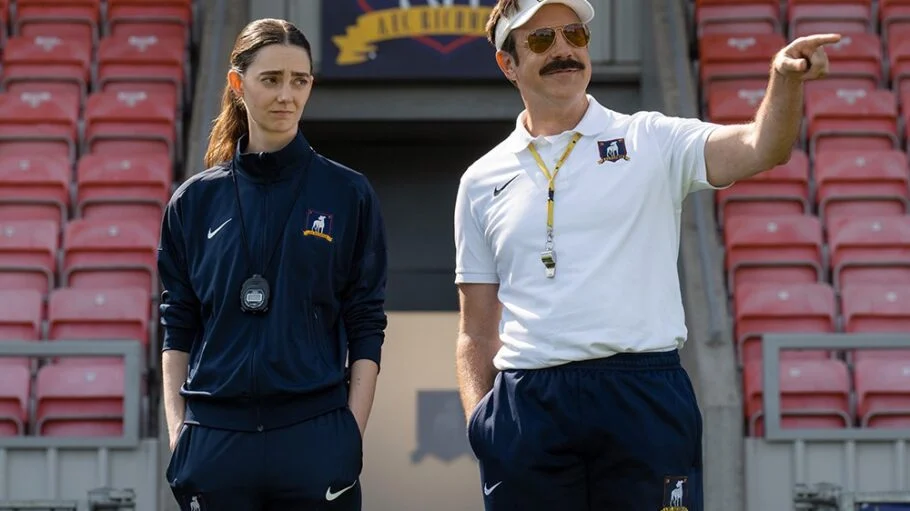
Ted Lasso came back this month after three years away, and the Ted we meet again isn't coaching anything. He's working the till at a grocery store in Kansas, in a job that's safe mainly because it asks nothing of him. It takes his own mother, at a garage sale, telling him plainly that nobody even asks about that job because he clearly doesn't care about it either, before he'll admit what he's actually been avoiding. Then he says yes to coaching a women's football team, a game he has never coached in his life, with no real plan beyond showing up. That gap, between knowing what you want and having any proof you'll be any good at it, is exactly where most of my clients get stuck too, and it's what got me writing this.
Action Comes First, Confidence Follows
A 2026 meta-analysis in Clinical Psychology Review pooled 115 studies and close to 29,000 people, finding that intolerance of uncertainty is strongly linked to worry, which in turn drives anxiety (Akbari et al., 2026, DOI: 10.1016/j.cpr.2026.102773). The pattern holds across almost every anxiety type studied: the more someone needs to feel certain before acting, the more anxious they get waiting for that certainty to show up. Ted doesn't get a guarantee the women's team will work out before he takes the job, he gets it by taking the job. The fix isn't forcing bravery, it's taking one small, reversible step and letting the feeling catch up afterward.
Naming the Fear Out Loud Shrinks It
A study in Behavior Therapy trained 274 people, mostly students, to practise shifting how they interpreted ambiguous situations, and found that flexibility in revising a worry, not just forced positivity, predicted better mood afterward (Vrinzen et al., 2026, DOI: 10.1016/j.beth.2026.01.004). The sample here was mostly female students, so treat it as suggestive for the wider population rather than definitive. In practice, this means naming the actual worst case rather than leaving it vague. “I might fail” feels enormous left unspoken. “I might fail this specific pitch, and present again next quarter if I do” is a sentence you can survive.
Waiting for Certainty vs Leaping With Imperfect Information
Waiting for Certainty vs Leaping With Imperfect Information: Gathering more opinions, more research, more time. Taking one small, reversible step. Feels safe short term, keeps you stuck long term. Uncomfortable, but moving. Same thoughts on repeat, no new information. Real information from what actually happens
Related reading
What's one small, reversible step you could take today on the decision you've been sitting on?
If the decision you're avoiding has real stakes, working with a counsellor can help you separate genuine risk from the discomfort of simply not knowing yet. Our blog has more on building everyday confidence, and articles by our counsellors dig into related patterns.
Are you considering starting therapy? Find your perfect counsellor today. Find your perfect counsellor today.
Start Therapy Today
Browse our therapists and connect with the right person to start your journey with - from today.
- All therapists listed are fully vetted
- Dedicated, passionate and honest
- Ready to take that first step with you